Discovering the Ancient European Bison
Explore the significance of the 4,000-year-old bison unearthed in Navarre, revealing new insights into Europe’s prehistoric wildlife and ecological history.

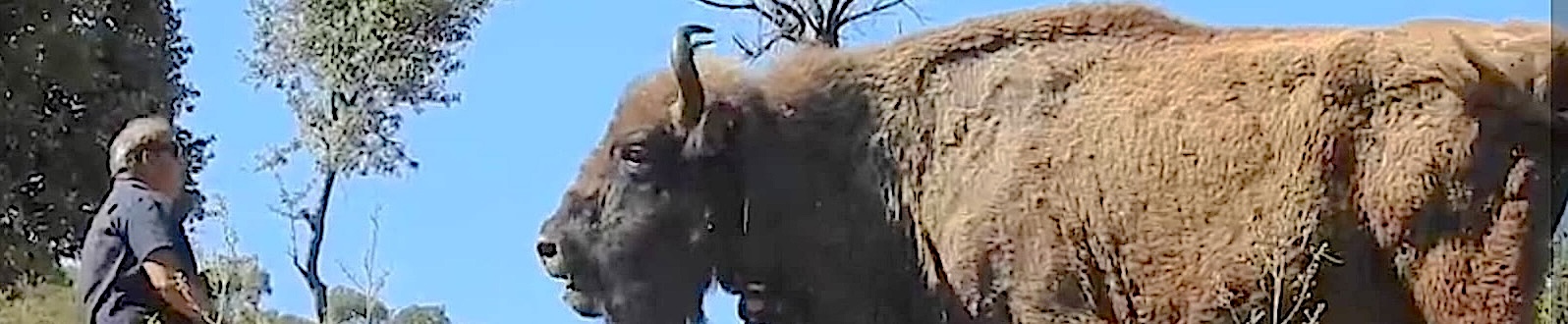
Discover the 4,000-Year-Old Bison Find
The 4,000-year-old bison skeleton found in 2024 in Sima Arrafela, within the Urbasa and Andía de Navarra Natural Park, halfway between the cities of Pamplona and Vitoria, 70 km north of Logroño, changes things a lot and gives Fernando Morán, me and those we defended that there are things that fall because of their weight and not recognizing them and cut them without giving them a margin is unpresentable.
An intervention promoted by the General Directorate of Culture – Príncipe de Viana Institution and in which scientists from the University of the Basque Country – EHU, the Museum of Natural History of Madrid, among other national and international institutions, recovered the bones of this first almost complete skeleton of bison found, which lived in the Sierra de Urbasa thousands of years after its predecessor, Bison priscus, became extinct.
The presentation of the find was made on February 8, 2026, with the presence of the president of the Autonomous Community of Navarra, María Chivite and the Minister of Culture, Sport and Tourism, Rebeca Esnaola Bermejo of this autonomy, in the Archaeology Funds of the Government of Navarra
Team
The team, led by Jesús García Gazólaz (General Directorate of Culture-Prince of Viana Institution) and Asier Gómez Olivencia, paleontologist (University of the Basque Country / Euskal Herriko Unibertsitatea-EHU) is made up of a large group of specialists.
The detailed study of the bison is being carried out by the prestigious paleontologist Jan van der Made, from the Museum of Natural Sciences-CSIC.
La reconstrucción 3D del cráneo del bisonte a partir de los fragmentos preservados, coordinada por el paleontólogo navarro Mikel Arlegi, actualmente investigador Marie Curie en el prestigioso Musée de l’Homme de Paris, con la ayuda de otros investigadores del equipo.
To better know the details of the death of the animal, a detailed taphonomic study will be made by the archaeologist Antonio Rodríguez-Hidalgo, who has studied the hunting of bison in different sites, among which the site of the Gran Dolina de Atapuerca stands out.
The analysis of other aspects of animal biology, such as the presence of pathologies, will be coordinated by Asier Gómez, and the study of the arrowhead will be coordinated by Jesús García Gazólaz.
Other members of the excavation, documentation, recovery and research team:
· Mónica Villalba de Alvarado (paleontologist; EHU).
· Carmen Núñez Lahuerta (EHU), bird specialist
· Ana Belén Marín and Lucía Agudo Pérez (University of Cantabria), specialists in the study of stable isotopes.
· Pere Gelabert and Corentin Deppe (University of Vienna), specialists in ancient DNA.
· Jurgi Cristóbal Azkarate (EHU), specialist in ecology of reintroduced bison.
· Martin Arriolabengoa (EHU), geologist, specialist in karst contexts.
· Arturo Hermoso de Mendoza (speleologist; G.E. Satorrak; topography of the cavity and support and paleontological installation).
· Teresa Lacosta Ramírez (archaeologist; specialist in 3D documentation).
· Alvar Manjón (paleontologist; EHU, feline specialist).
· Fran Sanz (geologist; UPNA).· Enrique Beruete (biologist).
· Juan Tomás Alcalde (biologist).
· Victor Abendaño Cabrejas (speleologist; G.E. Satorrak; documentation).
· Iosu Barragán Cidriain (archaeologist; documentation with drone).
· Aitor Alzueta Chivite (archaeology assistant).
· Renato Intxaurraga San Ildefonso (speleologist).
· Koldo Jaca (speleologist).


Uncover the 4,000-Year-Old Bison Discovery
Delve into the groundbreaking find of the European bison in Spain and its impact on biodiversity studies.

Historical Significance
Examine the evidence that redefines Europe’s ancient fauna and ecosystems.

Scientific Debate
Explore how this discovery informs current ecological and restoration discussions.

Ecological Impact
Understand the role of large herbivores, And especially bison, in ecological resilience and nature restoration.
Insights into the 2025 Bison Discovery
Explore crucial evidence from the Navarre bison find, revealing new perspectives on European biodiversity and ecological restoration.
| Gerrit Wehrenberg <gerrit.wehrenberg@senckenberg.de> | 15 ene 2019, 16:15 | ||
para fer.bison, mí | |||
Dear señor Morán,
dear Fernando Morán.
I also participated on the wisent conference in Criewen (Germany) last year. I am currently writing my master thesis at the Goethe University Frankfurt in the conservation genetics group of the Senckenberg Research Institute (Germany) on wisent genetics.
The topic of my thesis is the development of a molecular high-resolution marker chip for the European bison, to assess a variety of identification parameters and genetic structures of the population. This SNP chip is conceived to use non-invasive samples, mainly faeces, with clear applications for conservation managment in this species. As the genetic reference center for e.g. the wolf in Germany my research station in Gelnhausen has long and good experciences with such non-invasive genetic population monitoring.
Currently, we collecting the samples for the SNP chip development as well as for the following analysis of population genetics. I would like to collect in at least some of the 15 spanish holders of European bison with a special focus of EEP participants; namely Barcelona (Zoo), Estepona (Selwo Adventura), Jerez (Zoo), Madrid (Zoo/Aquarium) and Cabárceno (Parque de la Naturaleza). On that matter, I want to compare my molecular-genetic data with statistical-genetic data from the EEP to investigate the implications of molecular studies for such breeding programs in species conservation. Therefore, we primarily are interested in non-invasive samples like faeces, urine or saliva from e.g. feeding troughs. Dependent on the local situation “invasive” saliva samples are also of interest. If there are any tissue or blood samples from European bison stored we would be interested too, because those samples representing high quality sources for DNA extraction. Needless to say, the prepaired sampling kit would be provided by us.
It would be nice if you are able to give me contacts in the spanish wisent community.
When I contact those institutions it would be helpful if I could name you as a formal supporter (Fernando Morán as the president of the spanish EBCC etc.).
The EEP of the European bison (Douglas Richardson, Scotland), the German zoo association and all four German EBCCs are supporting my study. Furthermore, I keep a strong cooperation with the Mammal Research Institute of the Polish Academy of Sciences (MRI) in Białowieża, Poland.
First successful collectings were done in German zoos and parks like Hanau-Klein-Auheim, Wiesbaden, Hannover, Stuttgart and Bad Berleburg.
Further samples are from wild animals from Lebus (Germany), Poland and Russia. With those samples we found the best practice for collecting, storage and laboratory methods to yield enough DNA from non-invasive samples.
Further collecting in several other parks and national parks is done right now or is planned for the very near future.
If you are intereted in such a cooperation I will be contactable at any time for more detailed information or questions. I would be very pleased and it would help this conservation study!
Many thanks!
Best regards,
Gerrit Wehrenberg
Mail: Gerrit.Wehrenberg@senckenberg.de
Senckenberg Gesellschaft für Naturforschung (Rechtsfähiger Verein gemäß § 22 BGB)
Senckenberganlage 25
60325 Frankfurt
Direktorium: Prof. Dr. Dr. h.c. Volker Mosbrugger, Prof. Dr. Andreas Mulch, Stephanie Schwedheim, Prof. Dr. Katrin Böhning-Gaese, Prof. Dr. Kasten Wesche;
Präsidentin: Dr. h.c. Beate Heraus; Aufsichtsbehörde: Magistrat der Stadt Frankfurt am Main (Ordnungsamt)
Mitglied der Leibniz-Gemeinschaft
www.senckenberg.de
Vernetzen Sie sich mit uns: www.senckenberg.de/socialmedia

Discover the 4,000-Year-Old Bison Find in Navarre
Dive into the groundbreaking discovery reshaping our understanding of Europe’s ancient wildlife. Learn how this finding impacts biodiversity and ecological restoration efforts.
You must be logged in to post a comment.